
SSD or HDD? Here's What Actually Makes Sense in India
03 June 2026
If your PC takes forever to boot and you're still watching that loading circle spin, the fix might be cheaper than you think.
That Annoying 5-Minute Boot Time? Yeah, That's the HDD
You press the power button, go make chai, come back — and Windows is still loading. I've been there, on a perfectly "working" laptop with a 1TB HDD that had basically given up on life.
Here's the thing: people obsess over RAM and processors, but the storage drive is what decides how fast your system actually feels to use. And it's the most overlooked upgrade in India right now.
So let's settle this properly.
What Even Is the Difference?
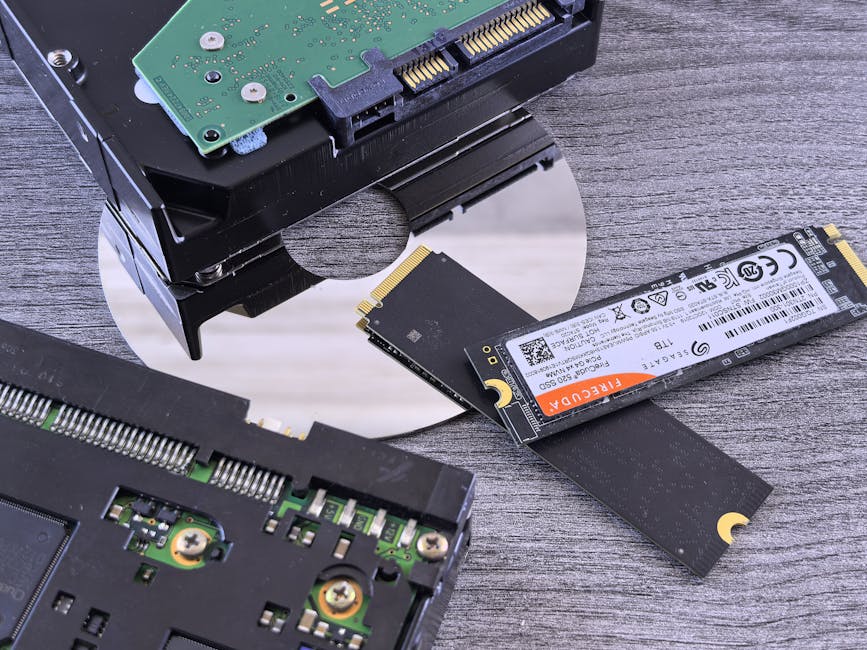
An HDD has actual spinning metal platters inside — mechanical, like a tiny record player reading data. That's why it's slow, makes noise, and hates being bumped around.
An SSD stores data on flash chips. No moving parts, no spinning, no waiting. Same basic idea as a USB drive, but much faster and built to last.
Everything else follows from this one difference.
Where HDDs Still Win
Honestly, HDDs aren't dead. They still make sense in a few situations:
- Bulk storage — 4TB or 8TB for photos, videos, raw project files? HDD is way cheaper per GB
- Backup drives — external HDDs are perfectly fine for archives you rarely touch
- Budget desktops that just need a lot of space and stay on a desk
In India, a 1TB HDD runs around ₹2,500–₹3,500. A 1TB SSD? More like ₹5,000–₹8,000 depending on type and brand. The price gap is real and it matters.
For Your Main Drive, Though? SSD. No Question.
If you're asking what to install Windows or macOS on — the answer is SSD, full stop. No cap.
The difference isn't subtle:
- Boot times drop from 3–4 minutes to under 15 seconds
- Apps open instantly instead of sitting there "thinking"
- File transfers stop being a meditation exercise
- No more clicking or grinding sounds under load
I've seen friends upgrade an old laptop from HDD to SSD and genuinely think they got a new machine. That's how dramatic it is.
Which Type of SSD to Pick
Two main options you'll find in the Indian market:
SATA SSD — plugs in where your old HDD sat, fits almost any laptop or desktop. Speeds around 500MB/s. Massive upgrade. Brands like Kingston A400, WD Green, and Samsung 870 EVO are safe bets in this range.
NVMe SSD — goes into the M.2 slot on your motherboard. Speeds of 2,000–7,000MB/s. If your machine supports it, this is the move for any build in 2025 and beyond.
For most people in India upgrading an older machine or doing a mid-range build, the sweet spot is a 500GB SATA SSD for the OS + a 1–2TB HDD for storage. Best of both worlds, and your wallet doesn't cry.
The Reliability Question
People worry about SSDs failing faster. Fair concern, but modern SSDs are rated for hundreds of terabytes of writes before degradation even starts. For everyday use, you won't hit that in a decade.
HDDs fail too — often more dramatically. A single drop, a power surge, a bad bump. Mechanical drives don't forgive any of that.
One Last Thing
If you're in India still running an HDD as your primary drive, swapping it for an SSD under ₹5,000 is probably the best upgrade you can make right now. More impact than doubling your RAM in most cases. Trust me on this one.
Check out our collection — we carry SSDs, HDDs, and everything in between at honest prices. If you're unsure what fits your machine, just ask. We'll sort it out.
Written By Ashok Kumar, tech specialist at Styleus